
Published: 22/05/2025
3 minute read
Follow Up: Let’s talk about anonymous access to Kubernetes
TL;DR: Kubernetes default anonymous-auth allows unended information exposure, but disabling it was hard. Now you can limit anonymous-auth to specific paths only.
In 2023 Rory McCune (raesene) wrote a nice blog post about Kubernetes anonymous-auth flag, which is enabled by default. While security mechanism like RBAC are still applied, certain endpoints in Kubernetes can be accessed without providing any form of authentication - therefore, it is called anonymous-auth.
He raised awareness for this flag and also did a regular Kubernetes Census listing how many Kubernetes API-Servers were publicly accessible and in which version. He was able to gather that data, because the /version path in one of the paths that can be accessed without any form of authentication.
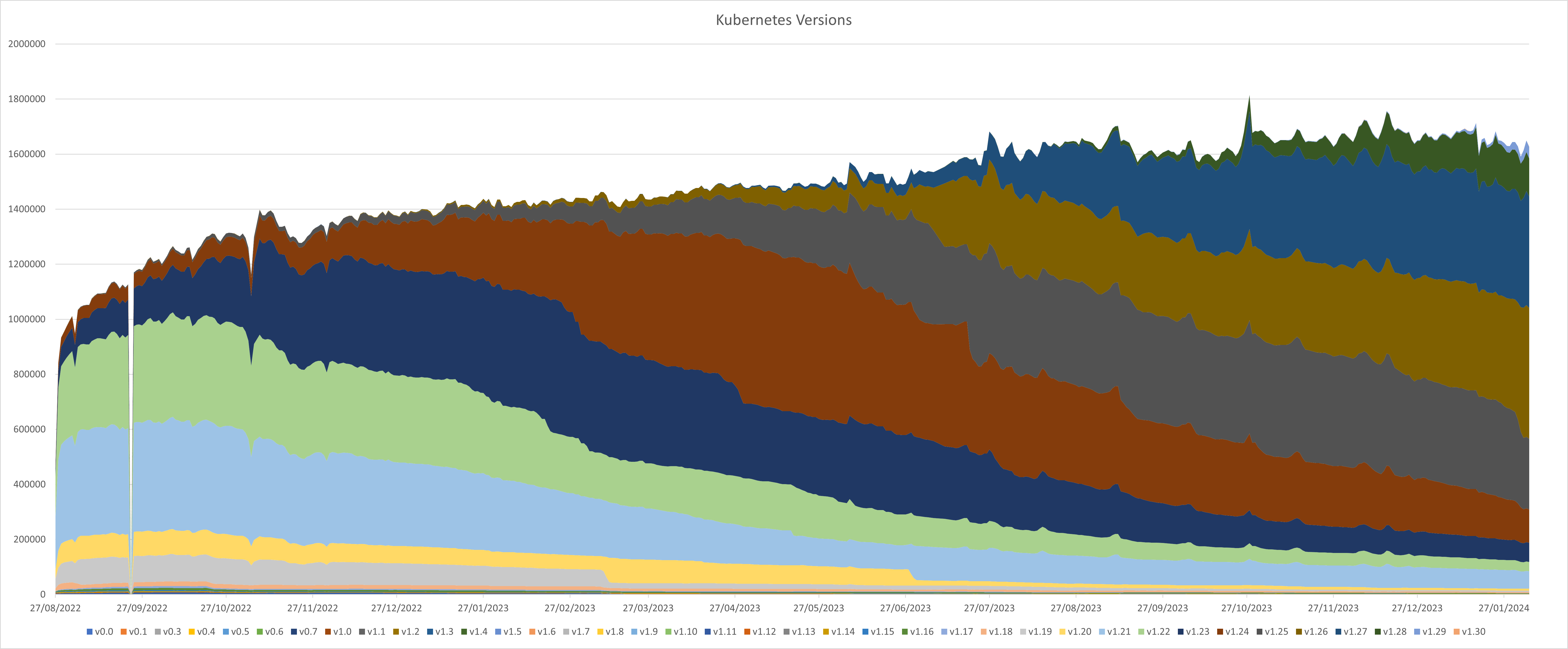
Rory McCune suggests to outright disable the anonyms auth flag with --anonymous-auth=false to reduce the exposed information and the potential attack vector. While it is definitely a smart idea, it is often unpractical since kubeadm needs certain anonymous-auth endpoints in order to join new nodes to a cluster.
In long-lived static clusters where new nodes are rarely added, this would not be a large issue, but the kube-api-server itself uses anonymous-auth endpoints in order to perform health checks on itself. These endpoints may also be used by loadbalancer in order to check it’s targets status.
If these checks failed, due to a 401 Unauthorized HTTP Error, the api-server would mark itself (actually it is the kubelet doing the check) as unhealthy and restart itself - over and over again. Making the whole cluster unaccessible.
So setting --anonymous-auth=false often was impractical.
But Kubernetes is a fast-moving platform and has heavily increased security in recent years with features like usernamespaces, appamor, selinux and bound-serviceaccount-tokens. They also introduced the structured-authentication-config in KEP-4633. A config file that allows users to declaratively configure OIDC-Auth (the only reasonable auth option for user access in larger clusters) AND a fine-grained anonymous auth configuration.
It took me a few tries but with the following authentication-config you can drastically reduce the information exposure of your cluster and still be able to join new nodes via kubeadm and check the cluster health.
It also prevents misconfiguration with unintended RBAC bindings to the unauthenticated group.
apiVersion: apiserver.config.k8s.io/v1beta1
kind: AuthenticationConfiguration
anonymous:
enabled: true
conditions:
# kubeadm needs to read the discovery info
- path: /api/v1/namespaces/kube-public/configmaps/cluster-info
# for liveness and readiness checks:
- path: /healthz
- path: /readyz
- path: /livez
jwt:
# Optional OIDC configThis only gives access to the health/status endpoints and to one specific configmap. The cluster-version and other information are not accessible without authentication.
The health endpoints only return 200 OK and the configmap contains the IDs of bootstrap-token and the clusters CA certificate, which is accessible anyway.
Thats it! Easy way to protect your clusters a little more without sacrificing functionality.
P.S. If someone knows how to write CEL expressions that can validate the extra claims of a user idtoken - write me!